Performance at the temperature your customers actually wash at.
Protease, cellulase, lipase, amylase and mannanase, supplied as liquid, granule or coated grade — screened for stability in surfactant-heavy matrices and documented batch by batch.

The enzyme set
Each enzyme targets one soil class. Used together as a composite, they cover the mixed stains a real wash load carries — without the pH and temperature conflicts that come from blending incompatible activities.
| Enzyme | Primary soil target | Active pH | Temp. | Dosage* | Form |
|---|---|---|---|---|---|
| Alkaline proteaseEC 3.4.21 | Protein — blood, sweat, egg, grass, food residue | 7.0–10.5 | 20–60 °C | 0.2–0.8 % | Liquid / granule |
| CellulaseEC 3.2.1.4 | Cotton pilling, surface fuzz, colour revival | 5.0–8.0 | 30–55 °C | 0.1–0.4 % | Liquid |
| LipaseEC 3.1.1.3 | Sebum, cooking oil, oily and fatty soils | 6.0–10.0 | 20–50 °C | 0.1–0.5 % | Liquid / granule |
| AmylaseEC 3.2.1.1 | Starch — rice, pasta, sauces, baby food | 6.0–9.0 | 25–60 °C | 0.1–0.4 % | Liquid / granule |
| MannanaseEC 3.2.1.78 | Food gums — ice cream, chocolate, dressings | 6.0–9.0 | 25–55 °C | 0.1–0.3 % | Liquid |
* Dosage expressed as % of finished formula, typical starting point. Actual load depends on activity, wash cycle and soil level.
Where the enzymes go to work
Built around the wash conditions your formula has to survive, not around a lab benchmark.
Liquid detergents
Low-temperature and high-efficiency cycles are the hardest case for enzyme stability. Liquid grades are selected for retention in high-surfactant, low-water matrices and for compatibility with protease in the same bottle.
Powder and tablet
Granule and coated grades carry the thermal load of spray-drying and compaction. Coating level is matched to your process so activity survives the tower, not just the shelf.
Institutional & industrial cleaning
Kitchen grease, protein build-up on surfaces and low-temperature hand-wash lines, where alkalinity is high and contact time is short.
Private label & OEM
Composite systems tuned to your target market's wash habits and machine base, with compatibility testing run in your own formula rather than a generic model wash.
From strain to finished grade
Four stages, each with a control point. The output is a product whose behaviour in your formula is known before it ships.
Strain selection and assay design
Expression hosts are screened against the target wash condition — pH, temperature, surfactant load — and an assay method is fixed before scale-up.
Submerged fermentation
Fed-batch cultivation with in-line control of feed rate, dissolved oxygen and pH, so titre and activity track the same curve run to run.
Recovery, concentration, formulation
Clarification and concentration followed by formulation into liquid, granule or coated grade, with stabilisers chosen for your storage conditions.
Application testing in your matrix
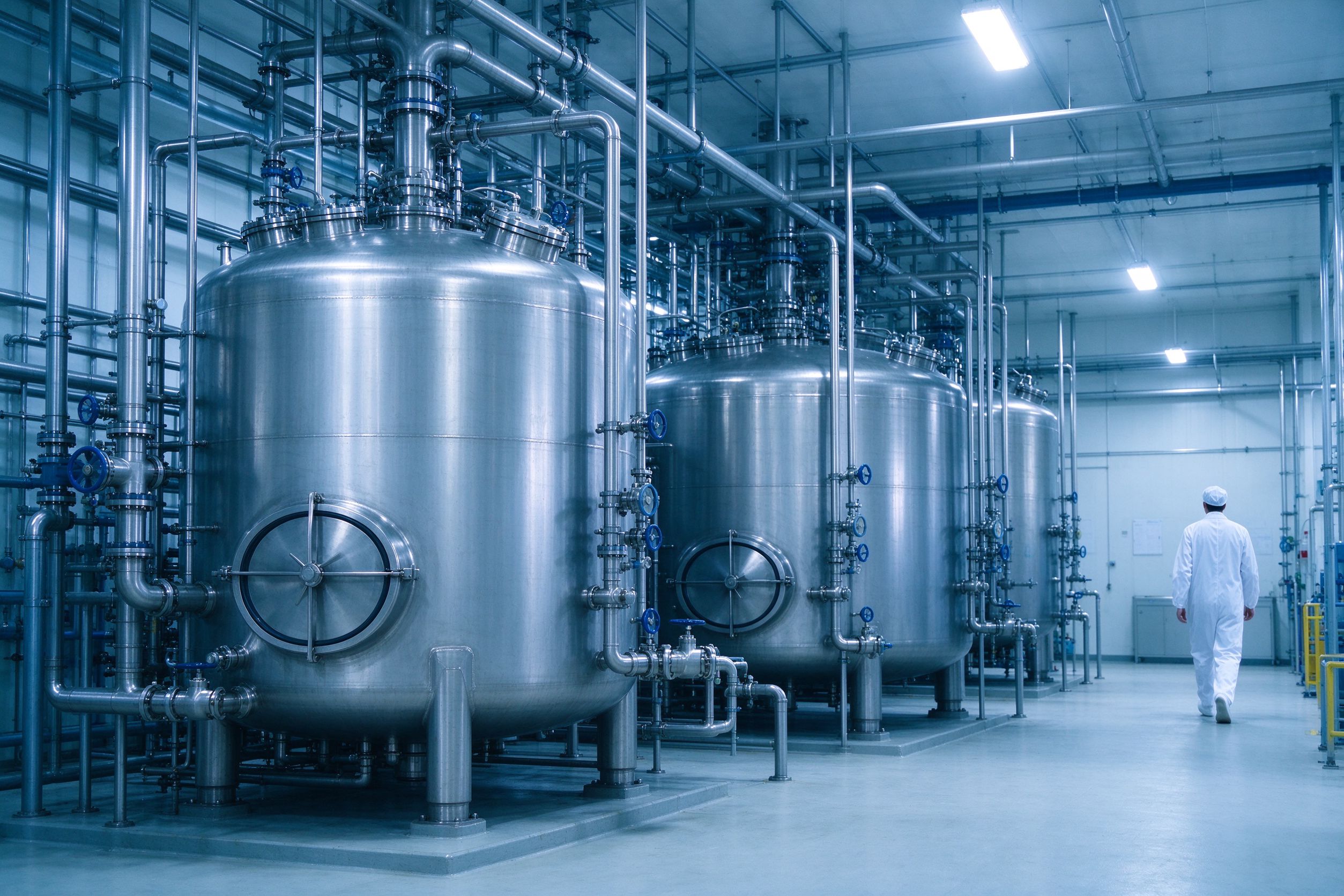
Compatibility screening against your surfactants, bleach system and fragrance, plus a wash trial at your reference cycle before commercial supply.
What ships with every lot
Three things a formulator needs before putting an enzyme into a commercial formula: a verifiable activity number, a stability statement, and evidence it will not fight the rest of the bottle.
Batch activity assay
Activity measured by a fixed method on every lot, reported against the specification range rather than an average.
Storage stability
Declared retention over shelf life at defined temperature, with accelerated data available for formulation trials.
Compatibility screening
Tested against anionic and non-anionic surfactants, bleach systems and fragrance, at the ratios your formula uses.
Certification badges above are layout placeholders. Keep only the ones you actually hold, and link each to its certificate number.
Start with a sample and your formula.
Send the wash condition you design for — machine type, cycle temperature, target market — and we return the recommended grade with a starting dosage.
- sales@[your-domain]
- Phone
- +86 [number]
- Address
- [Street, City, Province, China]
- Response
- Within two working days